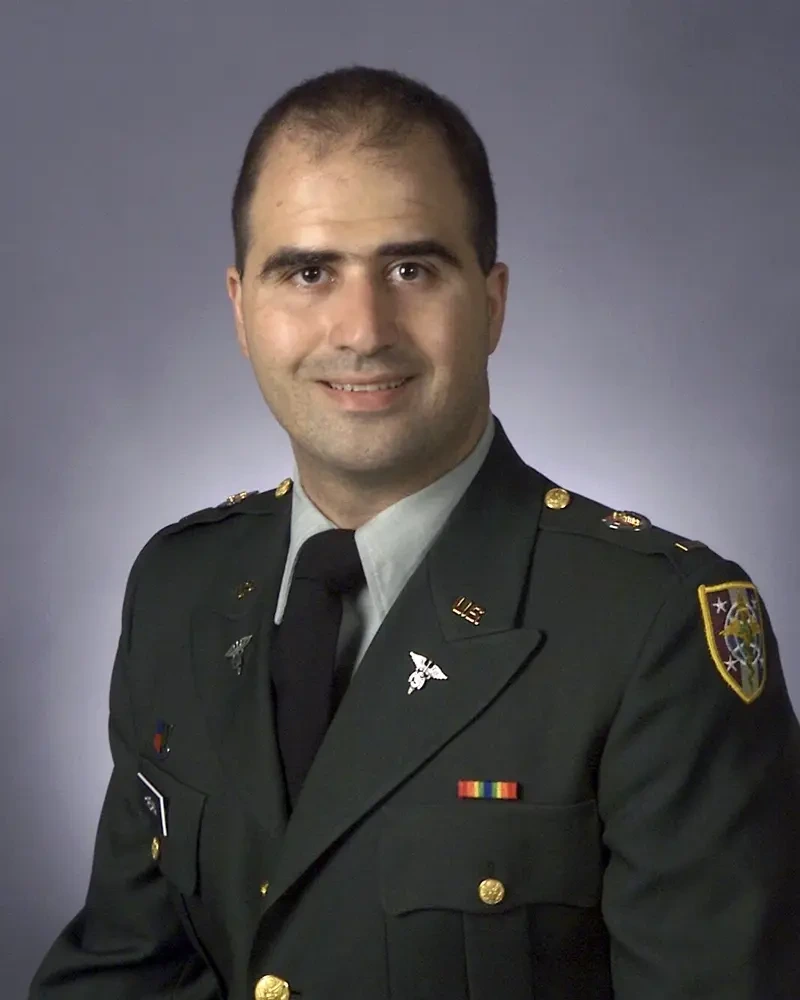
The Department of Defense confirmed on the 8th that a firing squad will execute Nidal Malik Hasan—a former Army psychiatrist who killed 13 people in a 2009 rampage at Fort Hood, Texas—at the base on December 3, with the entire process to be livestreamed online. This will mark the first time the U.S. military has carried out an execution in 65 years; President Trump approved the measure this week.
According to the Associated Press, Hasan, an Army psychiatrist holding the rank of major, walked into the Soldier Readiness Center at Fort Hood on November 5, 2009—where soldiers were queuing for vaccinations and pre-deployment medical screenings. After shouting “Allahu Akbar” (God is Great), he opened fire with a pistol equipped with a laser sight, killing 13 people and wounding 32, for which he was subsequently convicted.
The Army announced the date and location of the execution earlier this week. In an interview on the 8th with the conservative media outlet “Real America’s Voice,” Secretary of Defense Pete Hegseth stated that there was “no hesitation” regarding Hasan’s execution by firing squad, adding, “We will ensure the public can watch; it is open.”
The U.S. military has not executed a service member by firing squad since 1945, and this will be the first military execution in over 65 years.
Hegseth said, “We haven’t done this since World War II. Well, I quite like the mindset we had in World War II—which was ‘winning’.”
Hegseth’s announcement that the execution will be livestreamed has drawn renewed attention to the methods of capital punishment in the U.S., particularly following a recent botched lethal injection attempt involving 49-year-old death row inmate Christa Gail Pike in Tennessee.
The military’s decision to publicly livestream the execution—combining the death penalty system, the government’s use of punishment as a statement, and public broadcasting—has sparked legal and ethical controversy.
Deborah…, a death penalty expert and law professor at Fordham University… Deborah Denno argues that live-streaming executions makes the process “more transparent” and allows the public to understand what the death penalty actually entails.
Brenner Fissell, a professor at Villanova University Charles Widger School of Law, explains that many states face difficulties carrying out lethal injections due to challenges in obtaining execution drugs or finding medical personnel willing to participate; consequently, firing squads are increasingly viewed as a less cruel alternative.