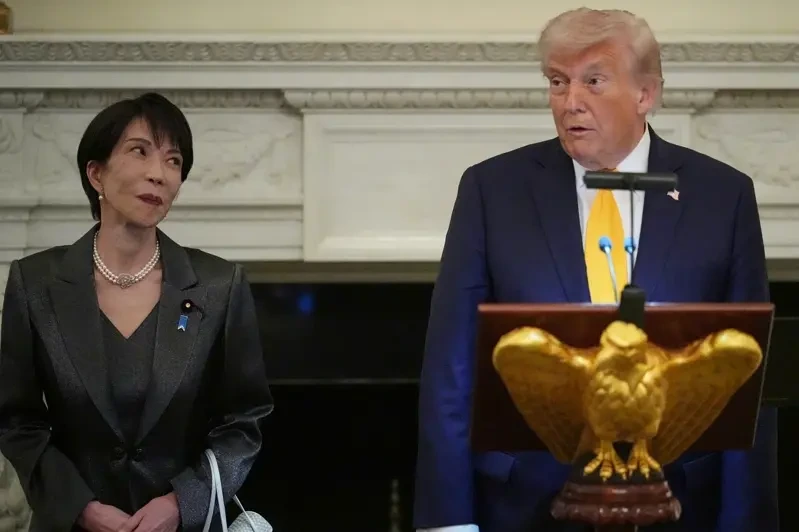
President Trump, who in May described a $14 billion arms sale to Taiwan as a “bargaining chip,” is now attempting to boost his approval ratings—which have suffered due to the conflict with Iran—thereby deepening concerns that he might make concessions regarding Taiwan. Reuters reported on the 17th that Trump is set to host Chinese President Xi Jinping on the 24th for their second summit of the year; U.S. allies in Asia are increasingly worried that he might soften his support for Taiwan in exchange for economic and trade gains from China.
Trump’s predecessor, Joe Biden, has repeatedly stated that the U.S. would defend Taiwan if China were to attack; Trump, however, has consistently refused to say whether he would do so, framing the summit with Xi instead as an opportunity to rebalance trade relations between the two major economies. Nevertheless, Trump has also stated that Xi personally assured him China would not attack Taiwan during his term. When the two met in Beijing this May, Xi also repeatedly raised questions regarding arms sales to Taiwan and Washington’s resolve to defend the island.
Government officials, lawmakers, and experts interviewed in Taipei, Tokyo, and Washington indicate that Xi Jinping is expected to pressure Trump on the Taiwan issue during the summit on the 24th. Foreign Minister Lin Chia-lung stated on the 15th that while Xi is expected to mention Taiwan, Washington has repeatedly affirmed that U.S. policy toward Taiwan remains unchanged. Shen Yu-chung, Deputy Minister of the Mainland Affairs Council, noted on the 14th that the Taiwan government has been clearly communicating its position to the U.S. side ahead of the Trump-Xi meeting, expressing the hope that “no situation detrimental to Taiwan will arise.”
Two Japanese government sources indicated that Japanese Prime Minister Sanae Takaichi is seeking to make contact with Trump prior to the Trump-Xi summit. A senior Foreign Ministry official traveled to Washington last week to help arrange a meeting between the two; the UN General Assembly in New York early next week is considered the most likely venue for such contact. They further noted that, given the high sensitivity of the Taiwan issue, Trump’s tendency to speak off-the-cuff is a particular source of concern.
The Taiwan issue was a focal point of the first Trump-Xi summit in May of this year. A source indicated that Tokyo hopes Trump will maintain established diplomatic language regarding Taiwan and does not want the issue to dominate the summit. Two senior lawmakers from the ruling Liberal Democratic Party (LDP) stated that Japan’s primary concern is that Trump might signal a softening of his stance on Taiwan in exchange for Chinese commitments to purchase U.S. goods, thereby securing economic achievements to tout to voters ahead of critical midterm elections.